
The Psychology of Dark Lobbies—Why Designers Love
Why Designers Choose Dark Lobbies
The lobby is the soul of any building, the very first space guests encounter and the one that sets expectations for everything that follows. While tradition often leans toward bright, open, and light-filled entrances, an increasing number of architects are embracing a more dramatic palette: darker tones, softer lighting, and understated elegance. This is not simply a matter of fashion; it is an intentional design choice rooted in psychology and atmosphere. Dark lobbies create intrigue, offering a sense of arrival that is both calming and commanding. In luxury villas, hotels, and commercial spaces, they establish an immediate sense of distinction, signaling that what lies beyond is carefully curated and exclusive.
The Psychology Behind It
Calm & Transition
In the UAE, where sunlight is almost relentless, moving directly from bright exteriors to equally bright interiors can feel overwhelming. Darker lobbies act as transitional buffers, gently easing the senses from the noise and glare of outside into the comfort of interior life. They reduce visual fatigue and create a sense of decompression.
Luxury Perception
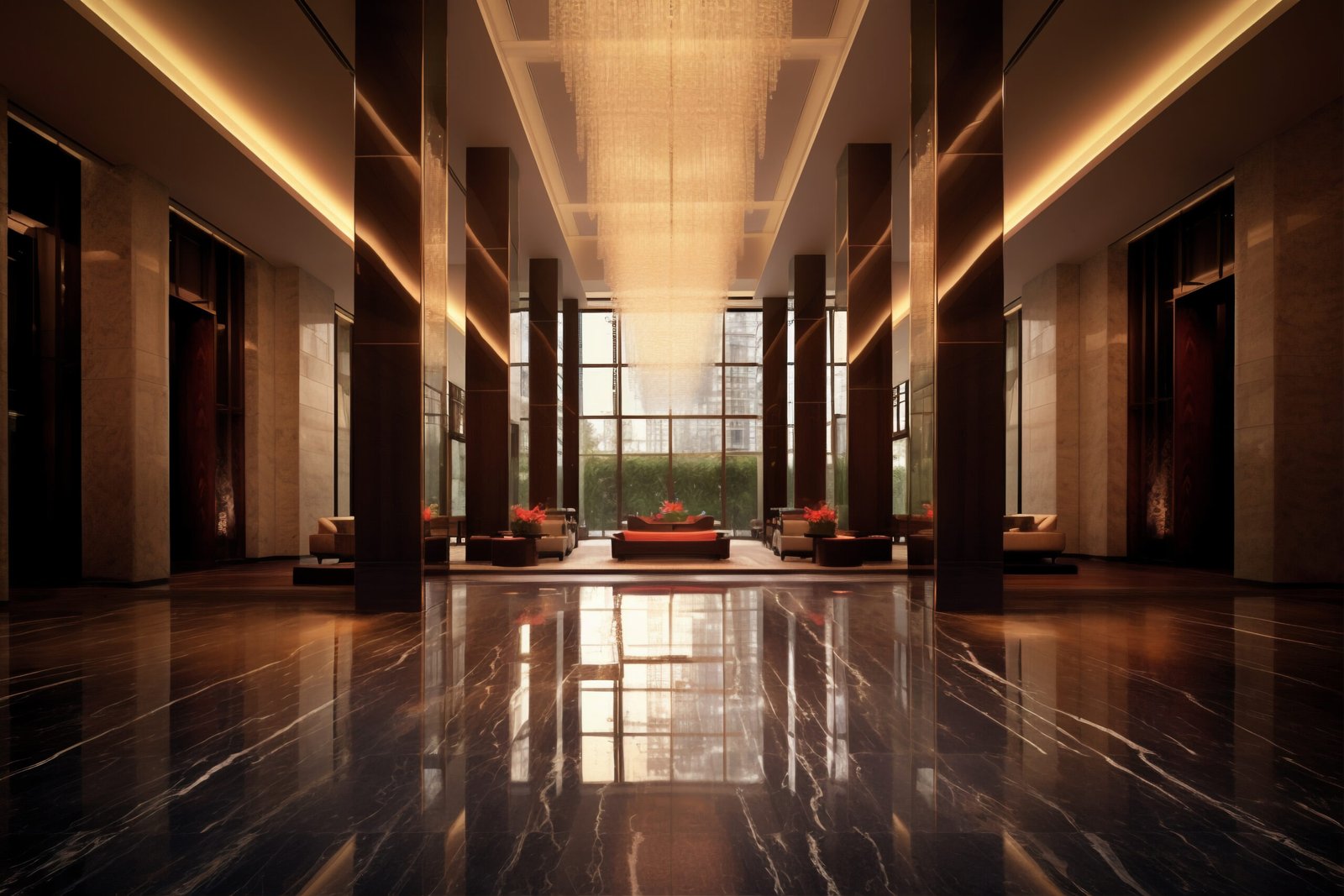
Deep tones and dimmed lighting have long been associated with exclusivity. Walk into any five-star hotel or a private luxury villa, and the lobby often reflects these choices. Darkness here doesn’t equal gloom—instead, it conveys refinement, privilege, and intimacy, making every guest feel they are entering a carefully curated environment.
Climate Comfort
The UAE’s climate makes dark design not just aesthetic but functional. By reducing glare, darker finishes and low lighting create cooler, more balanced environments. In lobbies, this design approach contributes to energy efficiency and comfort, complementing the sustainability goals many architects are now pursuing.
Attention to Detail
Dark spaces encourage the eye to focus. Rather than being distracted by an overload of light, visitors notice the subtle gleam of polished marble, the texture of porcelain tiles, or the play of light over a feature wall. Designers use darkness as a tool to highlight materials, art, or craftsmanship that might otherwise be overlooked in brighter settings.
Grounding Effect
There is also a psychological anchoring at work. Darkness brings depth, intimacy, and a sense of grounding. Guests walking into a darker lobby often feel more secure and enveloped, which enhances their overall comfort and makes their entrance experience memorable.
A Global Design Trend With UAE Relevance
Internationally, luxury hospitality has long embraced darker tones in entryways, from boutique hotels in Europe to grand resorts in Asia. In the UAE, this approach finds even greater relevance. Here, where the outdoors is defined by blazing light, the contrast of a darker, moodier lobby delivers a striking visual and emotional impact. It feels like an escape a sanctuary of sophistication that reflects global design while answering regional needs.
Explore Design Psychology With Eternal Home
While Eternal Home specializes in flooring and finishes, we recognize that design is not only about products but also about the experiences they create. By understanding psychological cues like light, color, and material texture, we help architects, designers, and homeowners make more meaningful choices. Visit our showrooms in Sharjah or Dubai to explore how tile colors, finishes, and formats can be used to create everything from airy, bright rooms to intimate, grounding lobbies.
FAQs
Q: Why are hotel lobbies sometimes dark?
A: Designers use dark palettes and low lighting to build a sense of calm, exclusivity, and intimacy while ensuring the first impression is dramatic.
Q: Does dark design make a space look smaller?
A: If poorly executed, yes. But with thoughtful lighting and material selection, dark lobbies create depth and focus rather than shrinking a space.
Q: Are dark lobbies suitable for UAE homes?
A: Absolutely. Villas and apartments increasingly use darker-toned entrances to provide a cooling, luxurious contrast to the region’s bright outdoor environment.