
Key Considerations for Home Renovations in the UAE
Home renovations in the UAE often involve balancing aesthetics, functionality, and climate adaptability. Whether it’s upgrading floors, bathrooms, or feature walls, homeowners must choose materials that withstand high usage while maintaining visual appeal. Tiles, in particular, play a pivotal role as they set the tone for durability, maintenance, and long-term lifestyle convenience. Understanding practical considerations—from material specifications to layout continuity—ensures projects deliver value, minimize disruptions, and meet design expectations.
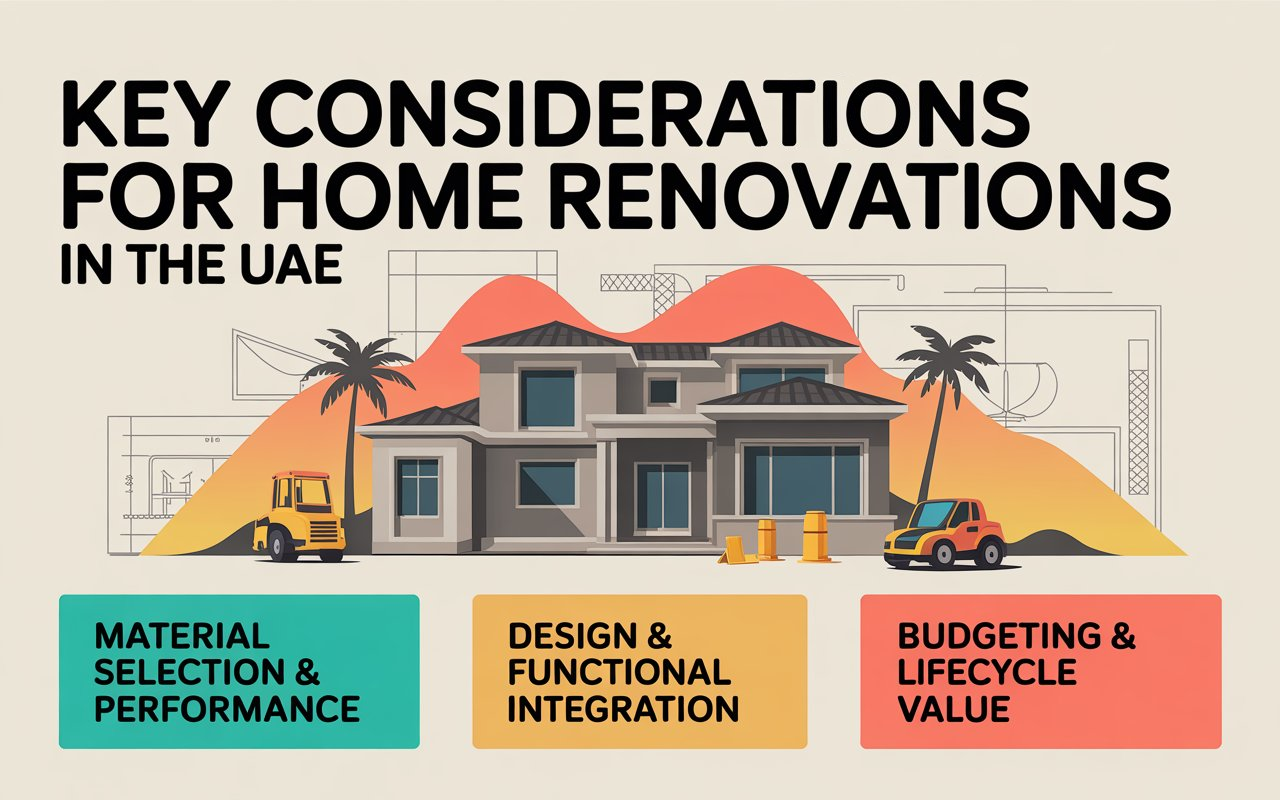
Material Selection & Performance
Selecting the right tiles is critical for renovation success. Porcelain stoneware remains the preferred choice for living areas, kitchens, and bathrooms due to its low water absorption (≤0.5%), high abrasion resistance, and dimensional stability. Large-format tiles reduce grout lines, improving aesthetics and minimizing maintenance. Outdoor or semi-outdoor zones require slip-rated, UV-resistant options to endure sand, heat, and water exposure. Matching textures and tones across different zones ensures a cohesive home design, while specifying high-quality adhesive and grout helps prevent future issues like cracking or joint failure.
Design & Functional Integration
Renovation projects must consider design flow, lighting, and functional usage. Coordinating tile finishes with wall colors, cabinetry, and furniture enhances overall harmony. In bathrooms, selecting moisture-resistant and slip-safe tiles prevents accidents and simplifies cleaning. Kitchens benefit from scratch- and stain-resistant surfaces that support heavy usage. Designers also factor in continuity from indoor to outdoor areas—patios, balconies, and poolside decks—ensuring a seamless transition. Practical design choices create long-term satisfaction, balancing luxury aesthetics with everyday functionality.
Budgeting & Lifecycle Value
Renovation budgets often constrain choices, making lifecycle cost a key consideration. Investing in high-quality porcelain tiles, even at a slightly higher upfront cost, reduces future replacement and maintenance expenses. Large-format and rectified-edge options minimize grout exposure, decreasing cleaning needs and repair cycles. Selecting durable bathware and tiles that align with lifestyle demands—children, pets, or high-traffic family areas—ensures that renovations maintain value for years to come, supporting resale or rental potential.
Conclusion
Successful home renovations in the UAE combine smart material selection, aesthetic planning, and functional durability. Porcelain tiles, slip-resistant bathware, and thoughtful design integration allow homeowners to achieve both visual impact and long-term performance. By considering practical challenges, budget, and lifecycle value, renovation projects can transform homes into comfortable, elegant, and resilient living spaces.
FAQs
1. Why is porcelain the preferred material for UAE renovations?
○ Its durability, low absorption, and large-format options suit indoor and outdoor use.
2. What should be considered for wet areas like kitchens and bathrooms?
○ Slip resistance, moisture resistance, and stain durability are essential.
3. How can renovation choices support long-term value?
○ Durable materials reduce maintenance, extend life, and enhance resale potential.
4. Are large-format tiles always better for continuity?
○ Yes, they reduce grout lines and create a seamless appearance when properly installed.